


Portable Grass Sickle Cutter Head | Fits Any Stick — Cut Standing Up
Portable Grass Sickle Cutter Head | Fits Any Stick — Cut Standing Up


 Ishita and 307 people purchased today
⚡ Monsoon Overgrowth Deal ⚡Ek baar kharcha — saalon ka kaam
🏷️ <strong>Extra 10% OFF</strong> On All Prepaid Orders — Auto-Applied At Checkout
FREE Delivery On Orders Above ₹499 · Cash On Delivery Available
Couldn't load pickup availability
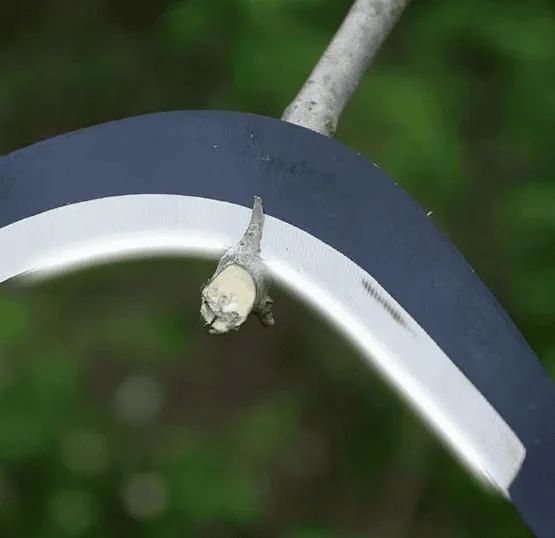
Ghaas kaatne ke liye jhukna zaroori nahi hai. This is the cutting head only — a hardened, serrated sickle blade with a bolt clamp that grips any wooden stick, bamboo or pipe you already have lying around. Fit it in half a minute and cut standing straight up, no petrol, no charging, no service bill.
- Khade-khade kaato — mount it on a long stick and your back stays out of it
- Fits any pole — wooden danda, bamboo or GI pipe; wing-nut clamp, no tools needed
- Hardened serrated edge — bites wet stems instead of sliding off them
- Nothing to run out of — no fuel, no battery, no blade refills, ever
- Sharpen at home — any flat file, five minutes, season after season
What's in the box (read this first)
One cutting head — the curved hardened-steel blade with its clamp collar, bolt and wing-nut, ready to mount.
- 1 × sickle cutter head, approx. 180 g
- Clamp collar with bolt and wing-nut, pre-fitted
- Edge pre-sharpened, protected for transit
The stick is not included. That is deliberate — a long wooden handle costs ₹40–60 in any local market, breaks eventually, and shipping a 5-foot pole would cost more than the tool. You keep the steel; you replace the handle whenever it splits.
How to fit it — 30 seconds, no tools
- Pick your pole. A straight wooden danda, bamboo or light GI pipe, roughly 4–6 feet. Thicker than a broom handle is better; a 25–35 mm end fits best.
- Slide the collar on and set the blade angle. Point the cutting edge slightly downward — about the angle you'd hold a hand sickle at.
- Tighten the wing-nut by hand until the head does not rotate when you twist it. If your stick is thin, wrap a strip of cloth or rubber under the collar for a dead-tight grip.
- Test on soft grass first and re-check the nut after your first few strokes. Wood compresses slightly under load; one extra turn settles it for the day.
Cutting technique matters more than force: pull, don't hack. Swing low and draw the serrated edge through the stems. Hacking downward blunts the tip and tires your shoulder.
What it cuts well
Good: lawn overgrowth and tall grass, monsoon weeds, paddy and wheat stalks, sugarcane and banana leaf, fodder grass, soft shrubs, thin green branches, canal-edge and boundary growth you can't reach with a trimmer.
Not for: dry hardwood, thick woody trunks, or anything you'd need an axe for — use the kulhadi for that. It's a grass and stalk tool, not a saw.
Sharpening & care
- Run a flat file along the inner bevel in one direction, 10–15 strokes, until you can feel the bite return. Five minutes, no machine.
- Wipe the blade dry after cutting wet grass — sap and moisture are what start rust.
- A drop of any oil on the edge and the bolt threads before storage keeps both moving freely.
- Store it detached from the pole, edge covered, hung up and out of children's reach.
Safety — please read once
- This is a sharp agricultural blade. Keep it away from children entirely, mounted or not.
- Clear a swing radius before you start — no people, pets or feet inside your arc.
- Wear closed shoes. Gloves help on long sessions.
- Check the wing-nut before every session. A loose head can rotate mid-stroke, and that is the one real risk with a clamp tool.
- Never cut above shoulder height or overhead — the tool is designed for low, drawing strokes.
Delivery, COD & returns
Free delivery above ₹499 and Cash on Delivery on every order. Dispatch within 24 working hours; most pin codes get it in 3–6 days. 7-day return window from delivery on unused items in original packaging — an edge that has already been used in the field can't be returned, so please check the fit before you cut. Prepaid orders get an extra 10% off automatically at checkout.


Pehla din, aur uske baad
Pehli safai
- Head clamped onto your own stick in well under a minute
- You're cutting upright — no squatting, no hand-sickle crouch
- Wet monsoon grass gets sliced instead of flattened
- Boundary and canal-edge growth you'd been avoiding finally goes
Ek baar ka kharcha
- No fuel bill, no charging, no servicing — nothing to run out of
- Five minutes with a flat file brings the edge back, every time
- Handle splits? Replace a ₹40 stick, not the whole tool
- Stores flat and detached instead of eating up a corner of the shed
A petrol brush cutter starts around ₹8,000 and then keeps asking for fuel and service. A daily labourer for clearing runs ₹300–500 each time. This is the version of the job that stops costing money after the first purchase.


Kamar dard, ya khade-khade kaam
A hand darauti means two hours bent double in the sun, one fistful of grass at a time. Knees complain first, then the lower back, and the job gets postponed until the plot looks abandoned.
Mount the same cutting action on a 5-foot stick and the geometry changes completely. You stand, you swing low, you cover ground — and you finish in a fraction of the time it took to crouch through it.

Wing-nut kaso, bas ho gaya
The whole mounting system is one collar, one bolt and one wing-nut. No spanner, no drilling, no bracket to buy. Slide it on, set the blade angle, tighten by hand.
Because it clamps rather than being welded to a handle, the head outlives every stick you put it on. When the wood splits after a couple of seasons, you buy another danda from the market and keep the steel.

Khet, bagiya, ya khaali plot
Serrated hardened steel is what lets it work on wet stems. A smooth edge slides off green paddy and monsoon grass; serrations grab and draw through, which is why the same stroke clears fodder grass, weeds and thin shrub together.
Farmers use it for stalk and fodder work, plot owners for the twice-a-year clear-out, and gardeners for the corner the trimmer can never reach.
Kaam mein dekho

Kaun sa tareeka sasta padta hai
| BAGIYA Cutter Head | Petrol brush cutter | Hand darauti | Daily labour | |
|---|---|---|---|---|
| What you pay | ₹699 once | ₹8,000+ upfront | ₹150–250 | ₹300–500 per clearing |
| Running cost | None | Fuel + servicing | None | Every single time |
| Your posture | Standing upright | Standing | Bent double | Not your problem |
| Maintenance | A flat file, 5 minutes | Engine, plug, cord, blade | Sharpening | — |
| Storage | Detaches, stores flat | Bulky machine | Small | — |
| Available when you need it | Always | If it starts | Always | If he turns up |
Asked before buying
Is the stick or handle included?
No. You get the cutting head with its clamp — you mount it on any wooden stick, bamboo or pipe you already have, or a ₹40–60 danda from the local market. Shipping a 5-foot pole would cost more than the tool itself.
What thickness of stick does it fit?
Most straight poles in the 25–35 mm range clamp perfectly. Thinner bamboo works too — wrap a strip of cloth or old rubber under the collar so the wing-nut has something to bite into.
Will the head come loose while cutting?
Not if the wing-nut is properly tight and you re-check it after the first few strokes — wood compresses a little under load. Tighten by hand until the head won't rotate when you twist it, and check it before each session.
Can it cut thick branches?
Thin green branches and shrub stems, yes. Dry hardwood or a proper trunk, no — that's axe work. Treat it as a grass, weed and stalk tool.
How do I sharpen it, and how often?
Any flat file, along the inner bevel, one direction, 10–15 strokes. Once before the season and once mid-season is enough for normal garden use; heavy paddy or fodder work wants a touch-up every few days.
Will it rust in the monsoon?
It's hardened steel, not stainless, so wet sap left on the blade will spot it. Wipe it dry after use and put a drop of oil on the edge before storing — that's the whole routine.
Is it left-hand friendly?
Yes. Because you set the blade angle yourself when you clamp it, you can orient the edge for a left- or right-handed draw stroke.
Is this the same as the ones sold in the local bazaar?
The shape is familiar; the steel and the edge are the difference. Soft bazaar blades bend on thick wet stems and lose their edge in a couple of weeks. This is a hardened, serrated head meant to be re-filed and reused rather than replaced.
Reviews
Loved by Home Gardeners
-
Quality better than expected
“Ordered this for my terrace garden and the build quality genuinely surprised me. Delivery was quick and the packaging was neat.”
-
Works exactly as described
“Genuine product, easy to use, and it did the job in my garden within the first week. Very happy with the purchase.”
-
Great value for money
“COD was smooth and the product feels sturdy. My plants are thriving — recommended for every home gardener.”
